TL;DR: The right Writesonic alternative depends on why you bought it. For SEO articles, I’d pick Surfer, Frase or Koala. For chat and everyday copy, ChatGPT, Claude or Jasper. For AI search visibility tracking alone, Otterly.AI or Peec AI. Paid entry prices run from $20 to $69 a month, as of October 2026. I compare 8 tools below.
Writesonic started as an AI writer. Today its homepage calls it “The AI Search Growth Engine”. The pitch is helping brands show up in ChatGPT, Gemini and Google AI Overviews.
The price list followed. Writesonic’s pricing page starts at $79 a month billed annually, as of October 2026. That Starter plan includes 50 tracked prompts, 15 AI articles a month and 1 user.
If you want AI visibility tracking plus content, that bundle can make sense. But if you only wanted a writing tool, you may be paying for features you don’t use.
So I split this list by job: SEO articles, chat and copy, and AI visibility. Pick the section that matches your use. For the full market, see my guide to the best AI writing tools. For marketing copy, my list of the best AI copywriting tools goes deeper.
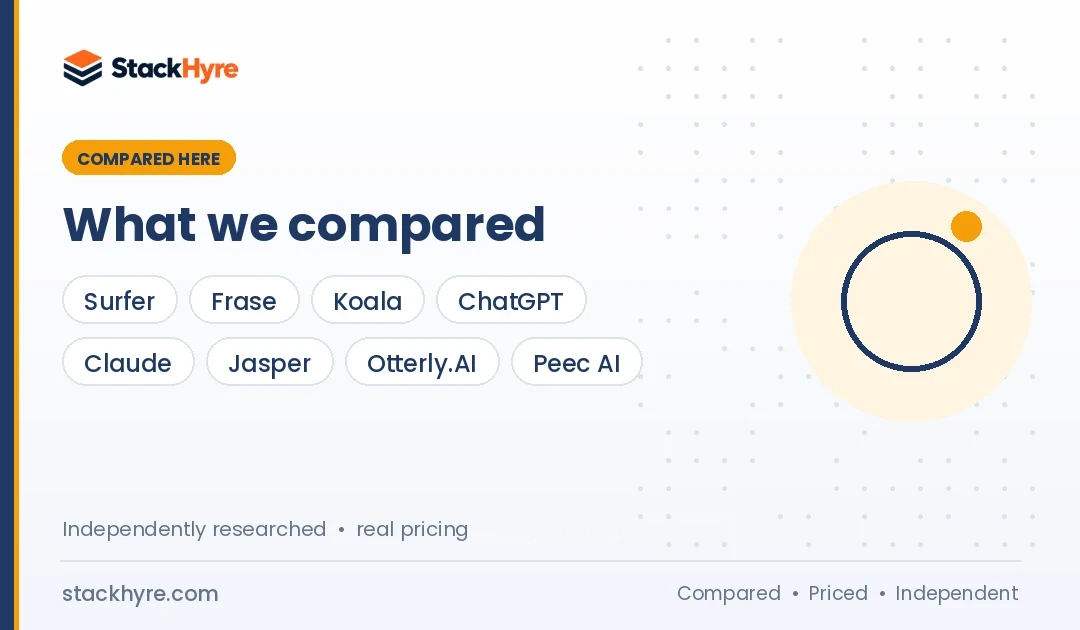
Quick Comparison: 8 Best Writesonic Alternatives
| Tool | Best For | Starting Price | Key Feature |
|---|---|---|---|
| Surfer | On-page SEO scoring | $49/mo billed yearly | Content editor plus AI tracking on higher plans |
| Frase | Briefs, articles and AI visibility | $49/mo ($39 yearly) | 7-day trial, no card |
| Koala | Fast SEO articles on a budget | Free; Starter $25/mo | WordPress publishing from Starter |
| ChatGPT | General chat and drafting | Free; Plus $20/mo | Projects and custom GPTs |
| Claude | Long-form drafting and editing | Free; Pro $20/mo ($17 yearly) | Projects with shared context |
| Jasper | Brand-safe marketing copy | $69/mo per seat ($59 yearly) | Brand Voices and agents |
| Otterly.AI | Cheap AI visibility tracking | Lite $29/mo | Tracks ChatGPT, AI Overviews, Perplexity, Copilot |
| Peec AI | Teams tracking AI visibility | Check pricing page | Unlimited users on every plan |
Why Are People Looking for Writesonic Alternatives?
Most people look elsewhere because Writesonic now sells itself as an AI search visibility platform, with content tools bundled in. Plans start at $79 a month billed annually, with capped articles and tracked prompts. Writers who just want drafts, and SEO teams who want one focused tool, can often pay less elsewhere.
Writesonic launched a dedicated Generative Engine Optimization platform in 2025. It shows which prompts a brand appears for in AI tools and how competitors compare. That’s a real need. It’s just a different need from writing.
Here’s what I hear most from people shopping around:
- Article caps. Starter includes 15 AI articles a month, and Growth includes 50. Heavy publishers hit that fast.
- Bundled features. You pay for visibility tracking even if you never look at it.
- Seat limits. Starter has 1 user and no option to add more, per the pricing page.
- Platform coverage. Starter, Basic and Growth track three AI platforms. All nine sit on Enterprise.
To be fair, Writesonic says it is trusted by “10,000+ leading Marketing teams.” That’s the company’s claim. It does suggest the visibility pivot has found buyers.
What Makes a Good Writesonic Alternative?
A good Writesonic alternative does your main job better or cheaper. For SEO writers, that means content scoring, briefs and publishing. For general writers, it means strong drafting at a flat price. For marketers tracking AI answers, it means wide platform coverage and enough prompts. One tool rarely wins all three, so choose by job.
Across every group, I looked for:
- A clear core job the tool does well.
- Public pricing or a free trial you can start without a sales call.
- Fair limits: articles, words or prompts that fit a real workload.
- Room to grow: extra seats, more prompts or more sites.
Best Writesonic Alternatives for SEO Articles
These three replace Writesonic’s article writer and SEO side. Two of them also add their own AI visibility tracking.
#1 Surfer: Best for on-page SEO scoring
Surfer is the pick if you write for Google first and want a score to guide each draft.
What it does well. Surfer grades your draft against the pages that already rank. You see which terms and topics are missing while you write. Higher plans now add AI search tracking too.
Key features:
- Content editor with on-page scoring
- Page tracking on every paid plan
- AI prompt tracking from Standard up
- Separate AI Search Analytics plan
Pricing. Surfer’s pricing page lists Discovery at $49 a month and Standard at $99 a month, both billed yearly, as of October 2026. Standard includes 25 AI prompts refreshed weekly. The AI Search Analytics plan is $82 a month billed yearly with 50 prompts refreshed daily.
Best for: SEO writers and agencies who want data-backed drafts.
Limitations. The page shows yearly prices only, charged up front. Discovery has no AI prompt tracking. If Surfer is on your shortlist, compare it with my Surfer SEO alternatives first.
#2 Frase: Best for briefs, articles and AI visibility in one
Frase is the closest match to what Writesonic offers now, at a lower entry price.
What it does well. Frase combines content briefs, AI articles, site audits and AI visibility on every plan. Starter tracks ChatGPT and Google AI. Higher tiers add Perplexity, then Claude and Gemini.
Key features:
- 10 articles and 50 audit pages a month on Starter
- AI visibility tracking on all self-serve plans
- AI crawler monitoring from Professional
- Content Guard page monitoring
Pricing. Frase’s pricing page lists Starter at $49 a month, or $39 billed yearly, as of October 2026. Professional is $129 a month, or $103 yearly, with 3 seats and 40 articles. Every self-serve plan has a 7-day free trial with no credit card.
Best for: Small SEO teams that want writing and AI tracking without Writesonic’s price.
Limitations. Starter covers 1 seat and 1 site. Claude and Gemini tracking only arrives on Scale at $299 a month. My Frase alternatives guide covers other brief-first tools.
#3 Koala: Best for fast SEO articles on a budget
Koala is built to turn a keyword into a publish-ready article quickly.
What it does well. Koala sells by words and credits, not by article count. Starter includes 45,000 words a month and one-click publishing to WordPress, Shopify, Webflow and Ghost. Unused words roll over for up to 3 months.
Key features:
- Publishing to WordPress, Shopify, Webflow and Ghost
- Brand DNA for voice settings
- Search Console dashboard and internal linking from Professional
- MCP server on every paid plan
Pricing. Koala’s pricing page lists Starter at $25 a month and Professional at $49 a month, as of October 2026. Annual billing saves 20%. A free plan gives a one-time 5,000 words.
Best for: Bloggers and niche site owners who publish often.
Limitations. Premium AI models count at 2x or 3x the words, per Koala’s pricing page. Fast articles still need a careful human edit.
One warning for this whole group. Fast article tools make it easy to publish a lot of thin pages. Google cares about quality, not who wrote the draft. My guide on whether Google penalizes AI content explains where the line sits.
Best Writesonic Alternatives for Chat and Everyday Writing
Writesonic was once known for its Chatsonic chat assistant, which its homepage no longer mentions. If chat is what you miss, a general assistant is the simple fix.
#4 ChatGPT: Best for general chat and drafting
ChatGPT is the most flexible option for daily writing, research and quick copy.
What it does well. It handles blog outlines, emails, ad variations and rewrites in one place. Projects and custom GPTs let you save a style guide and reuse it.
Key features:
- Projects and custom GPTs
- Deep research and agent mode on Plus
- File uploads and data analysis
- Business plan with admin controls and SSO
Pricing. OpenAI’s help center says ChatGPT Plus costs $20 a month, as of October 2026. A free tier and a cheaper Go plan also exist. Check the current Go and Business prices on ChatGPT’s pricing page.
Best for: Anyone who wants one flat-price tool for most writing jobs.
Limitations. No SEO scoring, no publishing and no visibility tracking. It drafts; you do the rest.
#5 Claude: Best for long-form drafting and editing
Claude is my pick for long articles and careful edits where tone matters.
What it does well. You can load briefs, style guides and source docs into a Project. Every chat in that Project starts with the same context. That keeps long pieces consistent.
Key features:
- Projects with shared files and instructions
- Research and web search
- Docs and file creation
- Team plan from 2 to 150 seats
Pricing. Anthropic’s pricing page lists Pro at $20 a month, as of October 2026. Billed yearly, it’s $17 a month. Team Standard seats are $25 a month, or $20 billed yearly.
Best for: Writers and editors producing long, voice-heavy content.
Limitations. No built-in SEO data. Pair it with Surfer or Frase if rankings matter.
#6 Jasper: Best for brand-safe marketing copy
Jasper fits marketing teams that want a writing tool with brand rules built in.
What it does well. Jasper stores brand voices, knowledge assets and audiences, so copy stays on message. Its Business plan also adds GEO agents and a GEO Hub, which run on credits.
Key features:
- Canvas workspace for marketing content
- 2 Brand Voices, 5 Knowledge assets and 3 Audiences on Pro
- Custom agents and Jasper Grid on Business
- API access and SSO on Business
Pricing. Jasper’s pricing page lists Pro at $69 a month per seat, or $59 billed yearly, as of October 2026. Pro includes a 7-day free trial. Business is custom with a 12-month commitment.
Best for: In-house marketing teams that care about voice more than SEO data.
Limitations. Pro includes 1 seat. GEO features sit on Business. For the head-to-head, read my Writesonic vs Jasper comparison.
Best Writesonic Alternatives for AI Visibility Tracking
If you bought Writesonic to see how AI answers mention your brand, these tools do that job alone. They don’t write articles.
#7 Otterly.AI: Best for cheap AI visibility tracking
Otterly.AI is the low-cost way to start tracking brand mentions in AI answers.
What it does well. Every paid plan tracks ChatGPT, Google AI Overviews, Perplexity and Microsoft Copilot. Claude, Google AI Mode and Gemini are optional add-ons.
Key features:
- Four AI platforms on every paid plan
- Add-ons for Claude, AI Mode and Gemini
- Extra prompt packs on Standard and Premium
- Free trial for new users
Pricing. Otterly’s pricing page lists Lite at $29 a month for 15 prompts, as of October 2026. Standard is $189 a month for 100 prompts. Annual billing takes 15% off.
Best for: Small brands testing whether AI visibility is worth tracking.
Limitations. Fifteen prompts on Lite is a small sample. And there’s no content writer, so you’ll still need a separate tool.
#8 Peec AI: Best for teams tracking AI visibility
Peec AI suits agencies and marketing teams that want many people looking at the same data.
What it does well. Every plan includes unlimited users. Starter tracks 50 prompts daily across 3 models you choose. Options include ChatGPT, AI Overviews, AI Mode, Gemini and Copilot.
Key features:
- Unlimited users on all plans
- Daily prompt tracking
- Multi-country tracking and Looker Studio on Advanced
- API access and SSO on Enterprise
Pricing. Peec AI’s pricing page didn’t show a readable price when I checked in October 2026. Annual billing gets 15% off, per its FAQ. Check the current price on Peec AI’s pricing page.
Best for: Agencies reporting AI visibility to clients.
Limitations. You choose only 3 models below Enterprise. No content tools.
When Should You Stay on Writesonic?
Stay if you actually use both halves: AI visibility tracking and content creation in one place. Writesonic bundles prompt tracking, AI articles, site audits and an action center on every plan. Buying Frase plus a tracker, or Surfer plus Otterly, may cost about the same once you add it up.
Do the math with your real numbers. Count the articles you publish each month and the prompts you need to track. Then price the two-tool combo against Writesonic’s tier that fits.
Writesonic also states it has data from “2 billion+ real AI conversations across 8 platforms and 50+ markets.” I can’t verify that figure. But a large dataset is the kind of thing single-purpose trackers may not match.
How Should You Choose the Right Writesonic Alternative?
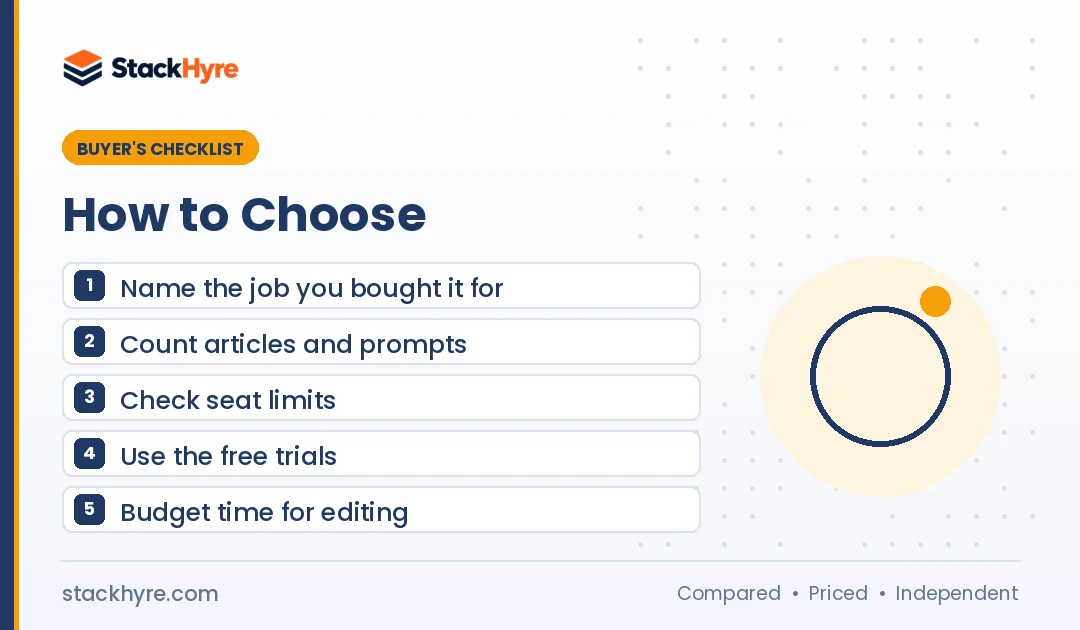
Name the job you bought Writesonic for, then pick the specialist. SEO articles point to Surfer, Frase or Koala. Everyday drafting points to ChatGPT or Claude at $20 a month. Brand copy points to Jasper. AI visibility alone points to Otterly.AI or Peec AI. If you need both content and tracking, compare Frase against staying put.
A simple way to decide:
- Check your last 30 days of use. Which Writesonic features did you open? That’s your real need.
- Count articles and prompts. Match them to plan limits, not to marketing pages.
- Count seats. Peec AI includes unlimited users. Writesonic Starter has 1.
- Use the free trials. Frase and Jasper each give 7 days. Run the same brief in both.
- Budget for editing. AI drafts need a human pass for facts and voice before they rank or convert.
For a broader look at SEO writing tools, my guide to the best AI SEO writing tools covers more options. And if you’re also weighing other marketing writers, my Copy.ai alternatives list overlaps with this one.
How I Evaluated These Writesonic Alternatives
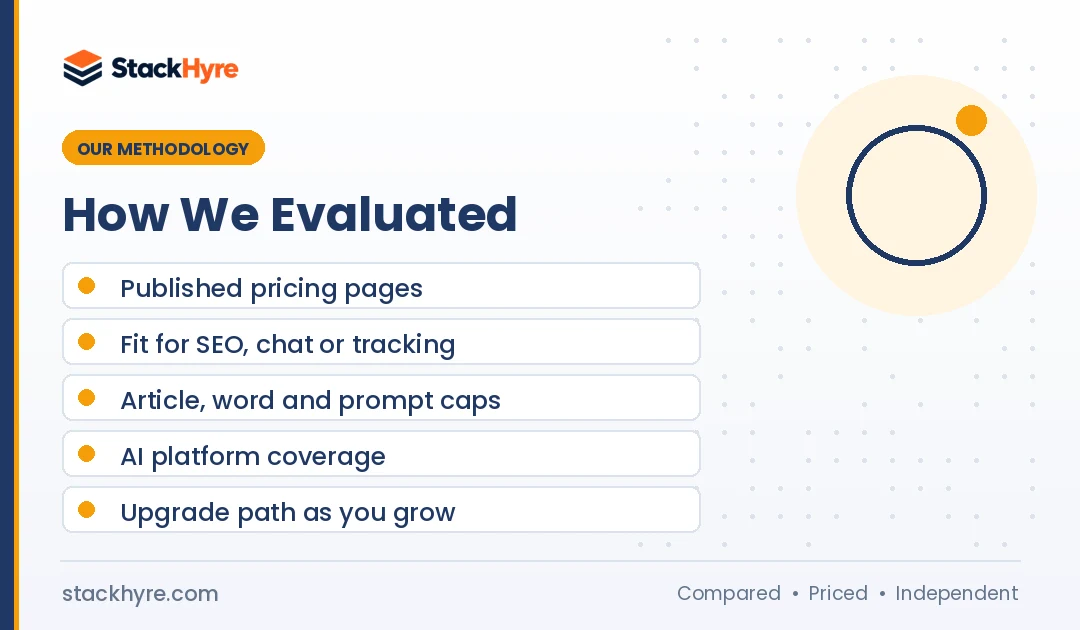
I compared each tool from its own pricing page, product pages and docs, as of October 2026. I read Writesonic’s homepage and pricing to set the baseline, then grouped alternatives by the three jobs Writesonic covers. I didn’t run hands-on output tests. Where a vendor makes a claim, I label it as theirs.
My criteria:
- Job fit: how well each tool covers SEO writing, chat or AI tracking.
- Published pricing: entry price, billing terms and trial rules.
- Limits: articles, words, prompts and seats per plan.
- AI platform coverage for visibility tools.
- Upgrade path as your volume grows.
There are no affiliate links here. My editorial policy explains how I pick and update tools.
The Bottom Line
Writesonic has become an AI search visibility platform with writing tools attached. That’s useful if you want both. If you don’t, a specialist will likely fit better.
My picks: Frase if you want articles and AI tracking at a lower entry price. Surfer if SEO scoring drives your work. Koala for fast, cheap blog posts. ChatGPT or Claude for everyday writing at $20 a month. Otterly.AI if you only need to track AI answers.
Next, see how the premium marketing option compares in my Jasper alternatives guide. Or go back to the full AI writing tools ranking for the big picture.
Frequently Asked Questions
What happened to Writesonic?
Writesonic moved from an AI writing tool to what it calls “The AI Search Growth Engine.” Its plans now center on tracking how brands appear in ChatGPT, Gemini and Google AI Overviews, with AI articles and site audits included. It launched a dedicated GEO platform in 2025. Writing tools are still there, but they’re no longer the main pitch.
How much does Writesonic cost in 2026?
As of October 2026, Writesonic’s pricing page lists Starter at $79 a month, Basic at $199 and Growth at $399, all billed annually. Starter includes 50 tracked prompts, 15 AI articles a month and 1 user. Enterprise is custom and tracks all nine AI platforms. The page also offers a free trial with no credit card.
What is the best free Writesonic alternative?
For writing, the free tiers of ChatGPT and Claude are the strongest no-cost options. Koala offers a one-time free allowance of 5,000 words for SEO articles. For AI visibility tracking, none of the tools I compared has a lasting free plan. Frase and Otterly.AI both offer free trials, though.
Is Frase a good replacement for Writesonic?
Yes, for most small SEO teams. Frase bundles AI articles, site audits and AI visibility tracking like Writesonic does. Its Starter plan costs $49 a month, or $39 billed yearly, as of October 2026. It also has a 7-day trial with no card. The trade-off is fewer AI platforms tracked on the lower plans.
Do I need an AI visibility tool at all?
Only if AI answers already drive buying decisions in your market and you plan to act on the data. A tracker shows where your brand appears, but it won’t fix gaps on its own. Start small, such as Otterly.AI Lite with 15 prompts, and upgrade only if the reports change what you publish.
Related Articles


The StackHyre Editorial Team writes about proxies, web scraping and email infrastructure. We compare providers using published pricing, official documentation and third-party reviews. All content is for educational and informational purposes only.