
TL;DR: The best AI for writing a book depends on your genre and how much control you want. Sudowrite is the best AI for fiction, from $10 per month. Novelcrafter is the best for planning a long series with a story bible, from $8 per month with your own AI key. Claude is the best general assistant for nonfiction and long manuscripts. I compared 6 tools with October 2026 prices from each vendor’s page.
Writing a book is a long project. A typical novel runs 70,000 to 100,000 words, with dozens of characters, plot threads, and settings to track. General chatbots forget details across that length. Book-specific tools fix that with story bibles, outlines, and style matching.
I split the list into fiction tools and general assistants. I also cover the copyright and Amazon KDP rules every author should know before using AI. For other writing tasks, see my guide to the best AI writing tools.
Quick Comparison: The Best AI for Writing a Book in 2026
| Tool | Best For | Starting Price | Key Feature |
|---|---|---|---|
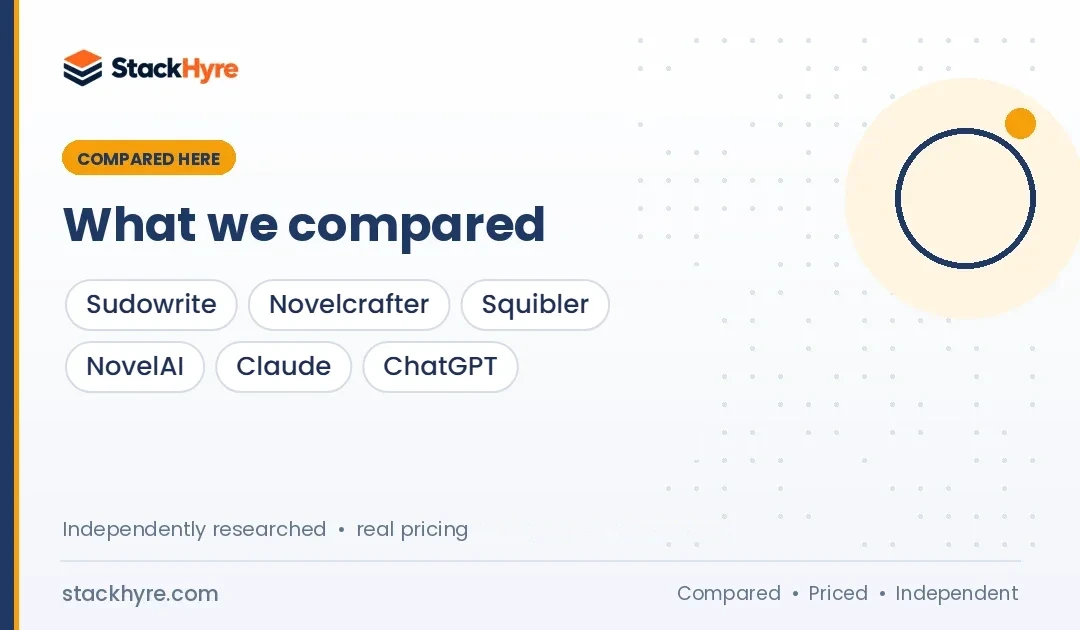
| Sudowrite | Fiction drafting | $10/mo | Muse, an AI model built for fiction |
| Novelcrafter | Series planning | $8/mo with your own AI key | Codex story bible |
| Squibler | Fast full-book drafts | Free; Plus $15.83/mo yearly | Full 200-300 page book generation |
| NovelAI | Creative story generation | From $10/mo | Worlds that remember details |
| Claude | Nonfiction and long manuscripts | Free; Pro $17/mo yearly | Up to 1M token context (varies by model) |
| ChatGPT | Brainstorming and outlines | Free; Plus $20/mo | General assistant |
Can AI Write a Whole Book?
AI can draft a whole book, but the result needs heavy human editing, and purely AI-generated text cannot be copyrighted in the US. Most authors use AI for outlining, brainstorming, and first drafts of scenes, then rewrite in their own voice.
The US Copyright Office states that copyright does not extend to purely AI-generated material, and that prompts alone do not provide enough control, per its Copyright Office report on copyrightability. Your human writing, your selection and arrangement, and your creative edits stay protected.
Best AI Tools for Writing Fiction
#1 Sudowrite: Best AI for Fiction
Sudowrite is the tool I recommend first to novelists, because it is built only for fiction.
What it does well. The Sudowrite pricing page lists Write, Rewrite, Describe, and Expand tools with story intelligence, style matching, and continuity across a series. It runs Muse and Ballad, its own AI models built for fiction. Expand takes you from outline to rough draft.
Key features:
- Muse and Ballad fiction models
- Style matching to your voice
- Series continuity
- Free trial with no credit card
Pricing. Hobby and Student costs $10 per month with 225,000 credits. Professional costs $22 per month. Max costs $44 per month with 2,000,000 credits, and unused credits roll over for 12 months. Yearly billing offers up to 50% off.
Best for: Novelists writing genre fiction such as romance, fantasy, and thrillers.
Limitations. Credits limit heavy use on the cheapest plan, and it is not built for nonfiction.
#2 Novelcrafter: Best for Planning a Long Series
Novelcrafter is the best pick for authors who plan before they draft.
What it does well. Its Codex is a story bible and world builder that tracks characters, places, and lore, per the Novelcrafter pricing page. AI features run on your own API key, so you pick the model and pay the provider directly.
Key features:
- Codex story bible on every plan
- AI scene summaries and character extraction
- Generate from scene beats
- 21-day free trial, all features unlocked
Pricing. Scribe costs $4 per month with no AI. Hobbyist costs $8 per month with bring-your-own-key AI. Artisan costs $14 and adds Workshop Chat. Specialist costs $20 and adds collaboration. There is no free plan.
Best for: Series authors and worldbuilders who want full control.
Limitations. You pay your AI provider separately, which adds setup and a second bill.
#3 Squibler: Best for Fast Full-Book Drafts
Squibler aims to turn an idea into a full manuscript quickly.
What it does well. The Squibler pricing page says the Plus plan generates a full 200 to 300 page book and keeps characters, plot, and structure consistent. It exports to PDF and DOCX.
Key features:
- Full book generation on Plus
- Manuscript-wide AI edits
- PDF and DOCX export
- Free plan with 1,000 AI credits a month
Pricing. Free costs $0 forever. Plus costs $15.83 per month billed yearly (list $29.99). Pro costs $49.17 per month billed yearly (list $89.99) with unlimited AI credits.
Best for: Nonfiction authors and first-time writers who want a quick draft.
Limitations. Fast full-book output needs the most editing to sound like you.
#4 NovelAI: Best for Creative Story Generation
NovelAI suits writers who want an AI co-author for free-form storytelling.
What it does well. The NovelAI site highlights story generation and worlds that remember everything. It also offers on-demand purchases for extra usage.
Key features:
- Story generation
- Persistent world details
- Trial period
Pricing. Subscriptions start at $10 per month. Higher tiers are listed on the site.
Best for: Hobby writers and interactive fiction fans.
Limitations. Less focused on structured manuscript planning than Novelcrafter.
Best General AI Assistants for Writing a Book
#5 Claude: Best for Nonfiction and Long Manuscripts
Claude is my top general assistant for book work because it holds a lot of text at once.
What it does well. The Claude pricing page lists a context window of up to 1M tokens, which varies by model. That lets you upload full chapters for feedback on pacing and consistency. Projects keep your outline and research in one place.
Key features:
- Very long context for full manuscripts
- Projects for outlines and research
- Strong at editing feedback
Pricing. Free plan available. Pro costs $17 per month billed yearly or $20 monthly.
Best for: Nonfiction authors, memoirists, and editors of long drafts.
Limitations. No built-in story bible or book formatting tools.
#6 ChatGPT: Best for Brainstorming and Outlines
ChatGPT is a fast, cheap partner for ideas and chapter outlines.
What it does well. It generates premise options, character backstories, and chapter-by-chapter outlines in seconds. It is strong for early planning.
Key features:
- Free plan
- Custom instructions for your book profile
- File uploads
Pricing. Free plan available. Plus costs $20 per month, per the ChatGPT pricing page.
Best for: Early brainstorming and outlining.
Limitations. Loses track of details across a long manuscript without careful setup.
How Much Do AI Book Writing Tools Cost?
AI book writing tools cost between $0 and $50 per month for most authors. Fiction-specific tools charge by credits or features. General assistants charge a flat monthly fee for broad use.
| Tool | Entry paid price | Free option | Story memory |
|---|---|---|---|
| Sudowrite | $10/mo | Free trial | Series continuity |
| Novelcrafter | $8/mo plus your AI key | 21-day trial | Codex story bible |
| Squibler | $15.83/mo yearly | Free plan, 1,000 credits | Character and plot consistency |
| NovelAI | From $10/mo | Trial period | Persistent world details |
| Claude | $17/mo yearly | Free plan | Projects and long context |
| ChatGPT | $20/mo | Free plan | Custom instructions |
Writing a novel takes months, so think in yearly cost. Sudowrite Hobby costs $120 a year at the monthly rate. Novelcrafter Hobbyist costs $96 a year, plus whatever your AI provider charges for usage.
Pros and Cons of the Top Picks
| Tool | Pros | Cons |
|---|---|---|
| Sudowrite | Fiction-trained models, style matching | Credit limits on the $10 plan |
| Novelcrafter | Best story bible, choose your own AI model | Separate AI bill, no free plan |
| Squibler | Free plan, full-book drafts | Fast drafts need heavy rewriting |
| Claude | Holds full chapters for feedback | No book-specific planning tools |
| ChatGPT | Fast, cheap brainstorming | Loses detail across long manuscripts |
Is AI Better for Fiction or Nonfiction?
AI helps nonfiction authors more with structure and research, and helps fiction authors more with brainstorming and scene drafts. The right tool follows the genre.
Nonfiction books follow a clear logic: problem, framework, examples, action steps. AI is strong at turning research notes into that structure. Claude suits this work because it handles long source documents in one chat.
Fiction depends on voice, character, and surprise. AI drafts tend toward familiar plot beats, so fiction writers use it to explore options rather than to write final prose. Sudowrite and Novelcrafter add the memory tools fiction needs, such as tracking a character’s eye color across 300 pages.
What Mistakes Should You Avoid When Writing a Book With AI?
- Publishing raw AI text: it reads flat, and purely AI-generated text has no copyright protection in the US.
- Skipping the story bible: without one, names, ages, and timelines drift between chapters.
- Generating whole chapters at once: scene-by-scene drafts stay closer to your outline.
- Forgetting disclosure: Amazon KDP requires you to flag AI-generated text, images, and translations.
How Do You Use AI to Write a Book, Step by Step?
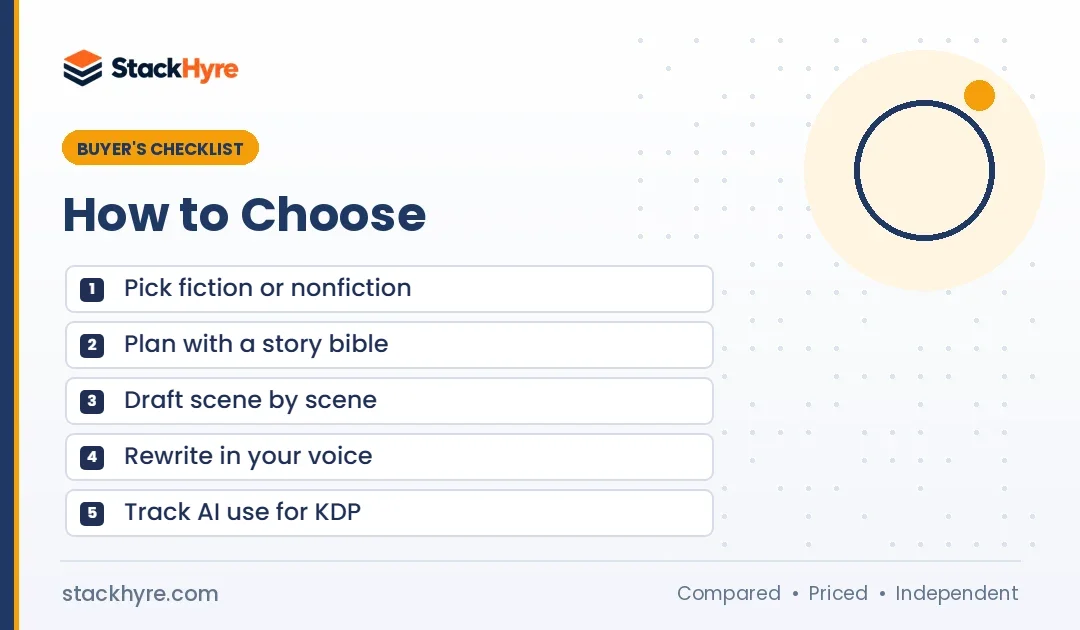
Use AI in stages: premise, outline, scene drafts, then revision, with you writing or rewriting the final prose. This keeps your voice in the book and keeps your copyright claim strong.
- Premise: ask for 10 premise variations on your idea, then pick and merge the best two.
- Story bible: list characters, settings, and rules. Store them in Novelcrafter’s Codex or a Claude Project.
- Outline: generate a chapter-by-chapter outline, then reorder and cut scenes yourself.
- Scene drafts: draft one scene at a time from your beats. Short scenes keep the AI on track.
- Rewrite: rewrite each scene in your own words. This is where the book becomes yours.
- Feedback: paste full chapters into a long-context assistant and ask for pacing and continuity notes.
- Line edit: run a grammar and style checker before beta readers see it.
Save each AI draft and your rewrite side by side. That record supports KDP disclosure and any copyright registration later.
What Are the Rules for Publishing an AI-Assisted Book?
Amazon KDP requires you to disclose AI-generated content, but not AI-assisted content. Text, images, or translations created by an AI tool count as AI-generated, even after heavy edits. Content you wrote yourself and then improved with AI counts as AI-assisted.
The KDP content guidelines also make you responsible for checking that all AI content follows its guidelines and respects intellectual property rights. For copyright registration, the Copyright Office says AI-generated content that is more than minimal should be excluded from the application, and AI should never be listed as an author.
In practice, keep a record of what you wrote and what AI drafted. That record makes both KDP disclosure and copyright registration simple.
How Should You Choose an AI Book Writing Tool?
Choose by genre, planning style, and budget. Fiction writers need style and continuity tools. Nonfiction writers need long context and research handling.
- Genre fiction drafts: Sudowrite.
- Big series or complex worlds: Novelcrafter.
- Quick nonfiction draft: Squibler.
- Memoir or nonfiction editing: Claude.
- Ideas on a zero budget: ChatGPT Free.
Polish the final draft with one of the best AI grammar checkers, and compare ProWritingAid vs Grammarly for long-form editing. To keep AI passages from sounding flat, read my guide to humanizing AI content.
Writing for a different use case? See my picks for the best AI for grant writing and the best AI for technical writing.
How I Evaluated These Tools
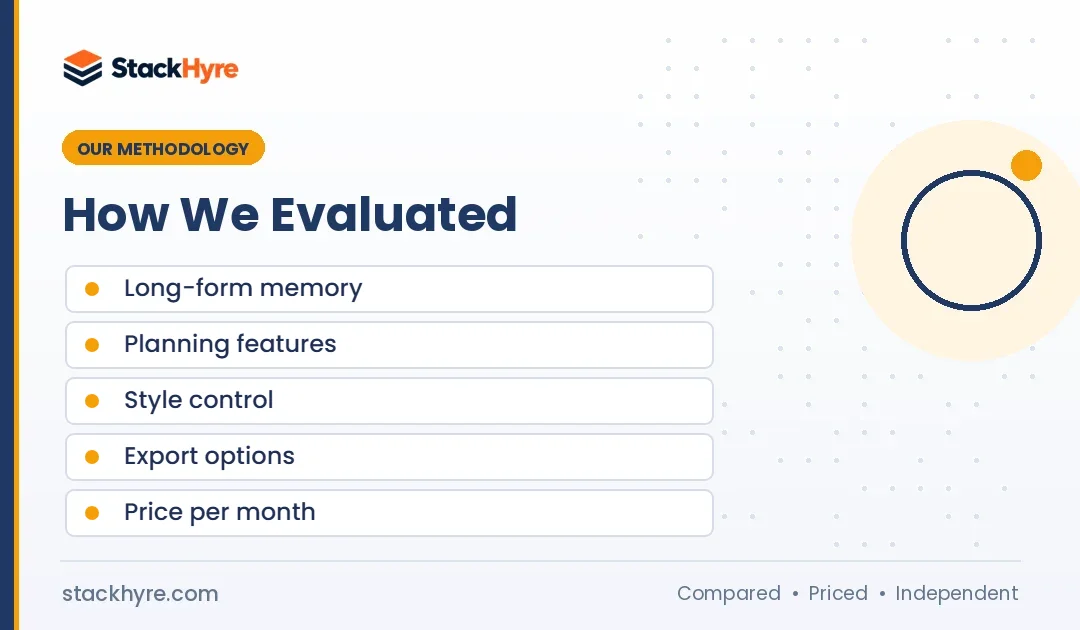
I read each vendor’s published pricing and feature pages on October 31, 2026, plus the US Copyright Office guidance and Amazon KDP rules. I scored tools on long-form memory, planning features, style control, export options, and price. I did not run a paid hands-on test of every tool. See our editorial policy.
The Bottom Line
Sudowrite is the best AI for writing a novel, Novelcrafter is best for series planning, and Claude is best for nonfiction. Whatever you pick, write the final voice yourself and track what AI drafted. For more tools, see my best AI writing tools guide.
Frequently Asked Questions
What is the best AI for writing a book?
Sudowrite is the best AI for writing fiction, with fiction-trained models and plans from $10 per month. Claude is the best for nonfiction and long manuscripts. Novelcrafter is best for planning a series with a story bible.
Can I copyright a book written with AI?
You can copyright the parts you wrote, plus your selection, arrangement, and creative edits. The US Copyright Office says purely AI-generated material and text from prompts alone are not protected.
Do I have to tell Amazon KDP I used AI?
Yes, for AI-generated content. KDP requires disclosure of AI-generated text, images, or translations. You do not have to disclose AI-assisted content that you wrote and then edited with AI.
Is there a free AI for writing a book?
Yes. Squibler has a free plan with 1,000 AI credits a month, and Claude and ChatGPT have free plans. Sudowrite and Novelcrafter offer free trials instead of free plans.
Which AI is best for fiction vs nonfiction?
Sudowrite and Novelcrafter are best for fiction because they track characters and style. Claude is best for nonfiction because it handles long research documents and full chapters at once.
Is Sudowrite better than ChatGPT for writing a novel?
Yes, for fiction. Sudowrite runs fiction-trained models, matches your style, and tracks continuity across a series. ChatGPT is cheaper for brainstorming but loses details across a long manuscript.
How much does it cost to write a book with AI?
Most authors spend $10 to $20 per month. Sudowrite starts at $10, Novelcrafter at $8 plus AI usage, and Claude Pro at $17 per month billed yearly. Squibler and Claude also have free plans.
Related Articles


The StackHyre Editorial Team writes about proxies, web scraping and email infrastructure. We compare providers using published pricing, official documentation and third-party reviews. All content is for educational and informational purposes only.