

TL;DR: Pick Postmark if your app’s email is mostly transactional and you care most about clean separation, long message history and simple pricing from $15 a month. Pick SendGrid if you send larger volumes, want a marketing email product too, or already use Twilio. SendGrid starts at $19.95 a month, as of October 2026. Below I compare pricing, free options, streams, logs, deliverability features and my pick by use case.
Gmail has asked every sender to keep user-reported spam rates below 0.3% since February 1, 2024. Google’s email sender guidelines recommend aiming for under 0.10%.
That rule changes how you should pick an email provider. If your marketing blasts share a reputation with your login codes, one bad campaign can push your receipts into spam.
Postmark and SendGrid answer that problem in different ways. Postmark is built around transactional email and splits other mail into separate streams with separate IPs. SendGrid is a broader platform that covers app email and marketing campaigns.
I read both vendors’ pricing pages, docs and policies for this comparison. For the full field, see my list of the best transactional email services for SaaS. If you mainly want to know what you’ll pay, my transactional email pricing guide lays out costs by volume.
Postmark vs SendGrid: Quick Comparison
| Factor | Postmark | SendGrid |
|---|---|---|
| Best for | SaaS apps that send mostly transactional email | Teams that want transactional and marketing email from one vendor |
| Owner | ActiveCampaign | Twilio |
| Free option | Free plan, 100 emails a month | 60-day trial, 100 emails a day |
| Starting paid plan | Basic $15/mo for 10,000 emails | Essentials from $19.95/mo |
| Message history | 45 days, up to 365 days on Pro and Platform | 3 days (Essentials), 7 days (Pro) |
| Dedicated IP | From $50/mo per IP, for 300,000+ emails a month, Pro or higher | 1 included on Pro and Premier |
| Marketing email | Broadcast streams from your app, no list tools | Separate Marketing Campaigns product |
| Key feature | Transactional and broadcast traffic never share IPs | Subusers, up to 1,000 teammates on Pro, Twilio ecosystem |
Figures come from the Postmark pricing page and the SendGrid Email API pricing page, as of October 2026.
What Is the Main Difference Between Postmark and SendGrid?
The main difference is scope. Postmark is a focused transactional email service. It keeps transactional and broadcast mail on separate IP pools, vets senders by hand and keeps 45 days of message history by default. SendGrid is a wider platform owned by Twilio. It sells an email API plus a separate marketing product, and it scales to very large volumes with subusers and 1,000 teammates. I’d pick Postmark for app email and SendGrid for mixed programs.
Here’s how I’d describe each one in a sentence:
- Postmark does one job, app email, and builds its rules around protecting that job.
- SendGrid does many jobs, from receipts to newsletters, and gives you the tools to manage them at scale.
Neither approach is wrong. It depends on whether your email program is mostly “user did something, send a message” or a mix of product mail and campaigns. My guide to transactional vs marketing email helps you sort your messages into those buckets.
How Do Postmark and SendGrid Compare on Pricing?
Postmark is cheaper at 10,000 emails a month: $15 on Basic versus $19.95 for SendGrid Essentials. SendGrid can be cheaper at higher volume, since third-party reviews put Essentials at 50,000 emails for $19.95. Postmark charges overages from $1.20 to $1.80 per 1,000 depending on plan. Use each vendor’s volume selector for your exact number before you decide.
Here’s what each vendor lists, as of October 2026.
| Plan | Postmark | SendGrid |
|---|---|---|
| Free | 100 emails a month, no overages | 60-day trial, 100 emails a day |
| Entry | Basic $15/mo from 10,000 emails, $1.80 per extra 1,000 | Essentials from $19.95/mo |
| Mid | Pro $16.50/mo from 10,000 emails, $1.30 per extra 1,000 | Pro from $89.95/mo |
| Top | Platform $18/mo from 10,000 emails, $1.20 per extra 1,000 | Premier, custom pricing |
| Very high volume | Contact sales above 1.5 million emails a month | Contact sales for Premier or custom volumes |
| Dedicated IP | From $50/mo per IP | 1 included on Pro and Premier, more as add-on |
A few notes so you read this table fairly.
Postmark’s plans differ by features, not volume. All three paid plans start at 10,000 emails. You pay a little more for Pro or Platform to get cheaper overages, longer retention options and more users. So at higher volumes, Pro or Platform often costs less than Basic.
A rough 50,000 email check. On Postmark Pro, 40,000 emails above the base at $1.30 per 1,000 adds $52. That’s my math from the listed overage rate, so about $68.50 a month. The live slider may show a better tier price, so check it. If SendGrid Essentials covers 50,000 for $19.95, as Sender’s SendGrid pricing review reports, SendGrid wins clearly here.
SendGrid’s volume tiers. SendGrid’s page shows “starting at” prices only. It says exact pricing depends on volume and features. Pick your volume on the live page to confirm.
So the price winner flips with volume. Small apps save with Postmark. Busier apps may save with SendGrid, as long as you’re fine with its shorter logs.
Which Has the Better Free Option?
SendGrid’s trial is more generous in the short run: 100 emails a day for 60 days. Postmark’s free plan is smaller, at 100 emails a month, but it doesn’t expire and allows no overages. For testing an integration, both are enough. For a tiny app that needs to stay free for good, neither is a great fit.
Sender’s review reports SendGrid ended its permanent free plan on May 27, 2025. Twilio’s pricing page now lists a “$0/mo for 60 days” trial with no credit card.
Postmark’s free tier is really a developer sandbox. You build and test your integration, then you move to a paid plan when you go live.
My advice: don’t pick a provider for its free tier. You’ll pay within weeks if your app gets real users.
How Do Message Streams and Marketing Email Compare?
Postmark separates transactional and broadcast email into different message streams, each with its own IP pool. Broadcast mail needs approval and an unsubscribe link, and you still send it from your app. SendGrid sells a separate Marketing Campaigns product with contact lists and an editor, from $15 a month. If you want marketing tools, SendGrid wins. If you want strict separation, Postmark wins.
Postmark streams. The Postmark message streams page says “transactional and broadcast traffic do not mix in Postmark, including IP ranges.” It also recommends separate From domains for each type. A single server can hold up to 10 streams.
Postmark is clear that it isn’t a marketing platform. There are no list uploads, no drag-and-drop editor and no campaign reports. You keep your subscriber lists in your own app and sync unsubscribes with a webhook.
SendGrid Marketing Campaigns. The Marketing Campaigns pricing page lists Basic from $15 a month and Advanced from $60. That gets you stored contacts, a visual editor and campaign sending.
Here’s my take. If your marketing team wants to build newsletters without engineers, SendGrid covers more. If engineers own all your email and you want the transactional reputation locked down, Postmark’s model is simpler and safer.
Which Keeps Better Logs and Fits Teams Better?
Postmark keeps far more history. Basic keeps 45 days of messages, and Pro and Platform let you set retention up to 365 days. SendGrid keeps 3 days searchable on Essentials and 7 days on Pro, with more for purchase. SendGrid wins on team size, though, with up to 1,000 teammates and subuser management on Pro.
Why logs matter. When a customer says “I never got my reset email,” you need the message, its status and any bounce reason. With 3 days of history, you often can’t answer tickets that arrive a week later. With 45 days, you usually can.
Retention add-on. Postmark sells custom retention from $5 a month, only on Pro or higher, per its pricing page.
Team seats. Postmark allows up to 4 users on Basic, 6 on Pro and unlimited on Platform. SendGrid allows 1 teammate on Essentials and 1,000 on Pro and Premier.
Webhooks. SendGrid lists 1 event webhook on the trial, 2 on Essentials and 5 on Pro. If you pipe events into several systems, keep that limit in mind.
My take: if your support team handles delivery questions, Postmark’s history is worth more than a few dollars of savings. If engineers handle them and you store events yourself, SendGrid’s shorter feed matters less.
For a deeper look at SDKs, docs and webhooks, see my guide to the best email API for developers.
Which Is Better for Deliverability?
Neither vendor can promise inbox placement, and I haven’t run send tests. What I can compare is design. Postmark’s strict stream separation, manual sender vetting and transactional focus protect shared IP reputation. SendGrid gives you a dedicated IP on Pro and free validations to clean lists. Both support SPF, DKIM and DMARC setup. Your own sending habits still decide most of the outcome.
Every sender now has to meet mailbox provider rules:
- Gmail: SPF or DKIM for all senders. SPF, DKIM and DMARC for senders of 5,000+ messages a day, plus one-click unsubscribe for marketing mail.
- Yahoo: similar rules for bulk senders, set out in the Yahoo Sender Hub FAQ.
- Microsoft Outlook.com: since May 5, 2025, high-volume senders must pass SPF, DKIM and DMARC. Failing mail gets a 550 5.7.15 bounce, per EasyDMARC’s write-up.
Dedicated IPs. Postmark says its dedicated IPs are for senders of 300,000 or more emails a month, on Pro or higher. That’s a sensible floor. Below it, a well-run shared pool is usually better. SendGrid includes a dedicated IP on Pro, but you’ll need enough steady volume to warm it.
Vetting. Postmark reviews senders manually and requires approval for broadcast streams. That slows signup a bit. It also keeps spammers off the shared pools you rely on.
For setup steps, my email deliverability guide walks through SPF, DKIM, DMARC, warmup and bounce handling.
Who Owns Postmark and SendGrid?
ActiveCampaign owns Postmark. It bought Postmark and DMARC Digests from Wildbit in 2022. Twilio owns SendGrid, a deal that closed on February 1, 2019. Both are now parts of bigger companies. That’s fine, but watch for plan changes. SendGrid’s free plan retirement in 2025 shows how ownership priorities can shift what you get.
Sources: ActiveCampaign’s press release on Postmark and Twilio’s SendGrid acquisition announcement.
The safe move with either: wrap your email calls in one small module in your code. Then you can switch providers quickly if pricing or policy changes.
Postmark or SendGrid: Which Should You Choose?
Choose Postmark if your email is mostly transactional, you send under about 50,000 emails a month, and you want long message history and strict stream separation. Choose SendGrid if you send larger volumes, need a marketing email product, want many teammates and subusers, or already use Twilio. For most early SaaS apps, I’d start with Postmark.
Here’s my pick by situation.
- Early SaaS, around 10,000 emails a month: Postmark Basic at $15.
- Support team needs long history: Postmark Pro, with retention up to 365 days.
- Around 50,000 emails or more: SendGrid Essentials, if your quote confirms the volume.
- Marketing team sends newsletters: SendGrid with Marketing Campaigns.
- Agency or multi-product setup: SendGrid Pro for subusers and 1,000 teammates.
Still weighing options? Compare my lists of Postmark alternatives and SendGrid alternatives.
How I Evaluated Postmark and SendGrid
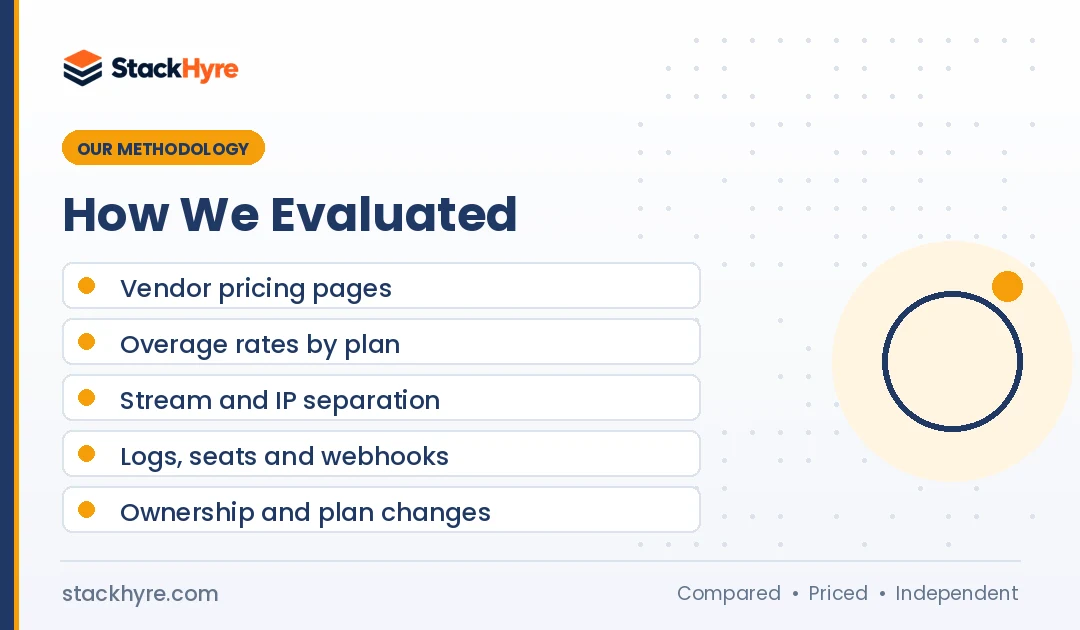
I didn’t run send tests or inbox placement tests for this comparison. I compared what each vendor publishes: pricing pages, plan limits, product pages and docs. I also checked the sender rules from Google, Yahoo and Microsoft, since every provider has to help you meet them.
Here’s what I weighed:
- Price at real volumes. Base prices, overage rates and where the winner flips.
- Free access. Trial length, daily or monthly limits and expiry.
- Reputation design. Stream separation, vetting and dedicated IP rules.
- Operations. Message history, team seats, subusers and webhooks.
- Ownership and stability. Who owns each vendor and recent plan changes.
Vendor claims are labeled as the vendor’s. All prices are as of October 2026. My editorial policy explains how I source and update comparisons.
The Bottom Line
Postmark and SendGrid are both good. They just aim at different teams.
Postmark is my pick for SaaS apps where email is mostly password resets, receipts and alerts. You get strict separation from marketing traffic, 45 days of history by default and simple pricing from $15 a month.
SendGrid is my pick when volume climbs or marketing joins the party. Its Essentials plan can be cheaper around 50,000 emails, and Pro adds a dedicated IP, subusers and room for big teams.
Either way, set up SPF, DKIM and DMARC first. Then price your real volume on both live pages. For the rest of the market, see my transactional email services ranking.

Frequently Asked Questions
Is Postmark better than SendGrid for transactional email?
For many SaaS apps, yes. Postmark focuses on transactional email, keeps it on separate IP pools from broadcast mail and stores 45 days of message history by default. SendGrid is a broader platform that also does marketing email and scales to large teams. If your email is mostly resets, receipts and alerts, Postmark is the simpler fit.
Is Postmark cheaper than SendGrid?
At 10,000 emails a month, yes. Postmark Basic costs $15 while SendGrid Essentials starts at $19.95, as of October 2026. At higher volumes it can flip, because third-party reviews report Essentials covers 50,000 emails. Postmark adds overages of $1.20 to $1.80 per 1,000 depending on plan. Check both volume selectors for your exact monthly number.
Can Postmark send marketing emails?
Yes, through broadcast message streams, but it isn’t a marketing platform. Broadcast mail runs on a separate IP pool, needs approval and must include an unsubscribe link. Postmark has no list uploads, visual editor or campaign reports, so you send from your own app. If you want those tools, SendGrid’s Marketing Campaigns product fits better.
Does Postmark offer a dedicated IP?
Yes, as an add-on from $50 a month per IP. Postmark says dedicated IPs are for customers sending 300,000 or more emails a month, and only on Pro plans or higher. SendGrid includes 1 dedicated IP on its Pro and Premier plans. Below a few hundred thousand emails a month, a good shared pool is usually the better choice.
Who owns Postmark and SendGrid?
ActiveCampaign owns Postmark, after buying it and DMARC Digests from Wildbit in 2022. Twilio owns SendGrid, a deal that closed on February 1, 2019. Both still run as distinct email products. Ownership can affect pricing and plans over time, so it’s smart to review each vendor’s pricing page yearly.
Related Articles


Daniel Brooks writes about proxies, web scraping and email infrastructure at StackHyre. He compares providers on published pricing, documentation and independent benchmarks so you can pick the right setup without overpaying.