

TL;DR: The best Postmark alternatives in 2026 are Resend for a modern API with a bigger free plan, Amazon SES for the lowest cost at volume, and Mailgun for a flexible, full-featured API. SendGrid fits teams that want marketing tools too. Entry plans run $10 to $20 a month, and SES costs $0.10 per 1,000 emails, as of October 2026. I compare 8 options on price, retention, IPs and fit.
Postmark is one of the most respected names in transactional email. Its pricing page lists Basic at $15 a month for 10,000 emails as of October 2026. That’s fair for what you get.
So why look at alternatives? Usually it’s one of three things.
First, the free tier is small: 100 emails a month. Second, a dedicated IP requires 300,000 emails a month and a Pro plan or higher. Third, at high volume, Postmark costs much more than raw senders like SES.
There’s also ownership. ActiveCampaign acquired Postmark in 2022. Some buyers want to know where a product is headed under a marketing software parent.
I compared 8 providers that beat Postmark on at least one of these points. For the wider view, see my guide to the best transactional email services for SaaS. To model your monthly bill, read my transactional email pricing guide.
Quick Comparison: 8 Best Postmark Alternatives
| Provider | Best For | Starting Price | Key Feature |
|---|---|---|---|
| Resend | Modern API with a bigger free plan | Free for 3,000 emails/mo | React Email from the same team |
| Amazon SES | Lowest cost at volume | $0.10 per 1,000 emails | Dedicated IP at $24.95/mo |
| Mailgun | Flexible full-featured API | Free for 100 emails/day | Inbound routing and parsing |
| SendGrid | API plus marketing campaigns | $19.95/mo Essentials | Twilio platform and ecosystem |
| SMTP2GO | Cheaper relay with dedicated IP | $10/mo for 10,000 emails | Dedicated IP on Professional |
| MailerSend | Visual templates for small teams | Free for 500 emails/mo | Drag and drop editor |
| Bird (SparkPost) | Millions of emails at low rates | $0.35 to $0.45 per 1,000 | Deposit balance carries forward |
| Brevo | Marketing and transactional in one | Free for 300 emails/day | CRM and automation included |
What Makes a Strong Postmark Alternative?
A strong Postmark alternative keeps the things Postmark does well, like fast delivery, clear logs and clean separation of transactional mail, while fixing what bothers you. That might be cost at volume, a small free tier, dedicated IP rules or limited marketing features. It also needs SPF, DKIM and DMARC support, webhooks and a solid API.
Postmark sets a high bar for transactional email. It splits mail into message streams and keeps 45 days of history by default. Not every alternative matches that.
So be honest about your goal. These are the trade-offs I see most:
- Lower cost usually means more DIY tooling, as with SES.
- A bigger free tier often means a tighter daily cap.
- Marketing features usually come with less transactional focus.
- Earlier dedicated IPs only help if you have steady volume.
Pick the trade-off you’re happy to make. Then pick the vendor.
Why Would You Move Away From Postmark?
Teams move off Postmark mostly for cost at high volume, its transactional-first content rules, the 300,000 monthly email minimum for a dedicated IP, and its small free tier. Postmark’s pricing page lists 100 free emails a month and $1.20 to $1.80 per extra 1,000 by plan, as of October 2026. SES charges $0.10 per 1,000.
Let’s look closer.
Cost at scale. Overage on Postmark Basic is $1.80 per 1,000 emails, per the pricing page. On SES it’s $0.10. At a few million emails a month, that difference is large. My pricing guide shows it at four volumes.
Content focus. Postmark is built for transactional email. It does offer broadcast streams, but heavy newsletter senders often find a marketing platform fits better.
Dedicated IPs. Postmark sells them from $50 a month, but only for senders at 300,000 or more a month on Pro or higher. SES sells one for $24.95 a month with no published volume minimum on its pricing page.
Free tier. 100 emails a month is enough to test, not to run a side project. Resend, SMTP2GO and Mailgun all give you more.
None of this means Postmark is a poor choice. For many SaaS apps it’s still my default. I compare it head to head with SendGrid in Postmark vs SendGrid.
Best Developer-Focused Postmark Alternatives
These four are the closest matches for engineering-led teams.
#1 Resend: Best for a modern API with a bigger free plan
Resend is the alternative I’d try first if you like Postmark’s focus but want a newer DX.
What it does well. Short docs, tidy SDKs and support for React Email, which its team maintains. The free plan is 30 times Postmark’s monthly allowance.
Key features:
- Free plan with 3,000 emails a month.
- 30 days of data retention on all plans.
- SDKs for popular languages and webhooks.
- Dedicated IP add-on on Scale.
Pricing. Resend’s pricing page shows Pro at $20 a month for 50,000 emails and Scale at $90 for 100,000. Extra emails cost $0.90 per 1,000. A dedicated IP is $30 a month on Scale for senders over 3,000 emails a day. The free plan has a 100 per day cap, as of October 2026.
Best for: JavaScript and React teams. My best email API for developers guide covers more DX picks.
Limitations. Retention is 30 days versus Postmark’s 45. It’s a younger company with a shorter track record.
#2 Amazon SES: Best for the lowest cost at volume
SES is the answer if Postmark’s bill has grown faster than your revenue.
What it does well. Pure per-email pricing with no plan. A standard dedicated IP is cheaper than Postmark’s and has no published volume minimum on the pricing page.
Key features:
- Pay as you go sending.
- Standard and managed dedicated IPs.
- Virtual Deliverability Manager add-on.
- Native AWS integration.
Pricing. The SES pricing page lists $0.10 per 1,000 emails and $0.12 per GB of attachments. A standard dedicated IP is $24.95 a month. Managed IPs are $15 a month per account plus a per-email fee, as of October 2026.
Best for: High-volume senders with engineers to build logs and bounce handling.
Limitations. You lose Postmark’s polished dashboard and message history. New accounts start in a sandbox with a 200 messages per 24 hours limit, per the SES docs.
#3 Mailgun: Best for a flexible full-featured API
Mailgun is the pick if Postmark feels too strict for your mix of mail.
What it does well. It handles transactional and bulk sending, inbound routing and logs. It also keeps a free plan of 100 emails a day, roughly 30 times Postmark’s free monthly volume.
Key features:
- Free plan with 100 emails a day.
- Inbound routing and parsing.
- Logs from 1 to 30 days by plan.
- Dedicated IP access at Foundation and Scale volumes.
Pricing. Mailgun’s pricing page lists Basic at $15 a month for 10,000 emails, Foundation at $35 for 50,000 and Scale at $90 for 100,000, as of October 2026.
Best for: Teams with mixed transactional and bulk sending.
Limitations. Basic keeps logs for only 1 day, far less than Postmark. Mailgun belongs to Sinch, which completed its Pathwire acquisition in 2021.
#4 SendGrid: Best for an API plus marketing campaigns
SendGrid is the move if you want transactional and marketing email under one roof.
What it does well. Mature API, dynamic templates and a full marketing product. Twilio completed its SendGrid acquisition in February 2019, so it connects to Twilio’s other channels too.
Key features:
- Email API, SMTP and Marketing Campaigns.
- Dynamic templates and event webhooks.
- One dedicated IP included from Pro.
- Large integration ecosystem.
Pricing. SendGrid’s Email API pricing lists a 60-day trial at 100 emails a day, then Essentials from $19.95 a month and Pro from $89.95, as of October 2026. Twilio retired the permanent free plan in 2025.
Best for: Teams that want one vendor for app mail and campaigns.
Limitations. No permanent free plan. Less transactional focus than Postmark.
Best Budget and High-Volume Postmark Alternatives
These cost less than Postmark at low volume, high volume or both.
#5 SMTP2GO: Best for a cheaper relay with a dedicated IP
SMTP2GO is a plain, affordable relay with a dedicated IP at a lower volume than Postmark.
What it does well. Its Professional plan includes a dedicated IP at 100,000 emails a month. Postmark requires 300,000.
Key features:
- Free plan with 1,000 emails a month.
- SMTP relay and REST API.
- 30 days of reports on paid plans.
- Dedicated IP on Professional.
Pricing. SMTP2GO’s pricing page lists Starter at $10 a month for 10,000 emails and Professional at $75 for 100,000, as of October 2026. Extra emails cost $1 and $0.85 per 1,000.
Best for: Small apps and WordPress sites. See my best SMTP relay services for more.
Limitations. Less polish and fewer developer features than Postmark.
#6 MailerSend: Best for visual templates on small teams
MailerSend suits teams where marketing or support edits email copy.
What it does well. It pairs an API with a drag and drop builder. Postmark’s templates are more developer-centric.
Key features:
- Free plan with 500 emails a month.
- Drag and drop and HTML editors.
- API, SMTP and webhooks.
- Dedicated IPs on Enterprise.
Pricing. MailerSend’s pricing page lists 500 free emails a month and a Hobby plan for 5,000 at under $10 a month. Starter and Professional include 50,000 emails. The page showed discounted prices when I checked, so confirm the live figure. Dedicated IPs need Enterprise and over 100,000 emails a week.
Best for: Small product teams with shared email ownership.
Limitations. Dedicated IPs only on Enterprise.
#7 Bird (SparkPost): Best for millions of emails at low rates
Bird is a managed option for very high volume at prices far below Postmark’s overage.
What it does well. You fund a deposit and spend it at a per-1,000 rate. MessageBird acquired SparkPost in 2021, and the service now runs under Bird.
Key features:
- Free plan with 1,000 emails a month.
- Per-1,000 rates from a deposit.
- Unused balance carries forward.
- Dedicated IP add-ons and IP pools on Growth and Scale.
Pricing. Bird’s email pricing page lists Startup at a $15 deposit and $0.40 per 1,000, Growth at $250 and $0.45 per 1,000, and Scale at $1,000 and $0.35 per 1,000, as of October 2026.
Best for: Senders in the millions who still want managed tooling.
Limitations. The deposit model is unfamiliar. Dedicated IP add-on prices aren’t listed on that page.
#8 Brevo: Best for marketing and transactional in one
Brevo is the right swap if you want one platform for newsletters and app mail.
What it does well. Transactional API and SMTP plus campaigns, automation and a CRM. If Postmark’s content rules block your marketing sends, Brevo is built for them.
Key features:
- Free plan with 300 emails a day.
- Transactional API and SMTP.
- Campaigns, automation and CRM.
- Dedicated IP on Enterprise.
Pricing. Brevo’s pricing page lists 300 free emails a day and Starter at $9 a month for 5,000 emails, as of October 2026. Enterprise is sold through sales.
Best for: Small teams wanting one vendor for every email type.
Limitations. Less transactional focus than Postmark. Keep app mail on its own subdomain, as I explain in transactional vs marketing email.
How Should You Choose a Postmark Alternative?
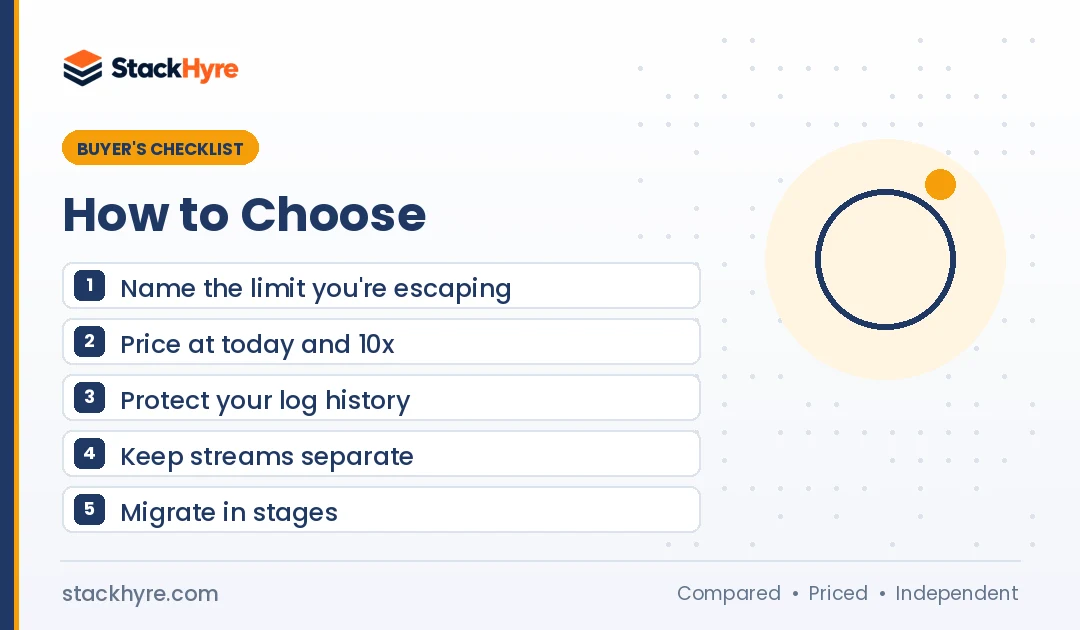
Decide which Postmark limit you’re escaping, then choose the vendor that removes it with the fewest new trade-offs. For cost, go to SES or Bird. For a bigger free plan and modern DX, go to Resend. For flexibility, pick Mailgun. For marketing in the same tool, pick SendGrid or Brevo. Then check retention, IP rules and price at your volume.
Here’s how I’d run it.
1. Write down your volume. Price at today’s volume and at 10x. Postmark’s overage and SES’s per-email rate diverge fast as you grow. My guide to choosing a transactional email service has a full checklist.
2. Protect your logs. If support relies on Postmark’s 45 days of history, don’t drop to 1 day. Resend’s 30 days or Mailgun Scale’s 30 days are the nearest matches.
3. Keep streams separate. Postmark’s biggest strength is isolation. Recreate that with separate subdomains or IP pools on your new vendor.
4. Stay compliant. Gmail’s sender guidelines and Yahoo’s bulk sender rules took effect in February 2024 and require SPF, DKIM and DMARC. Yahoo also wants spam rates below 0.3%. Microsoft began sending non-compliant mail from domains above 5,000 messages a day to Junk on May 5, 2025, per Petri. My email deliverability guide covers the setup.
5. Migrate in stages. Move low-risk mail first and keep Postmark running until the new vendor’s numbers look healthy.
How I Evaluated These Postmark Alternatives
I did not run delivery tests for this guide. I compared each vendor’s published pricing, plan limits and docs as of October 2026. I also read ownership announcements and the public sender rules from Gmail, Yahoo and Microsoft.
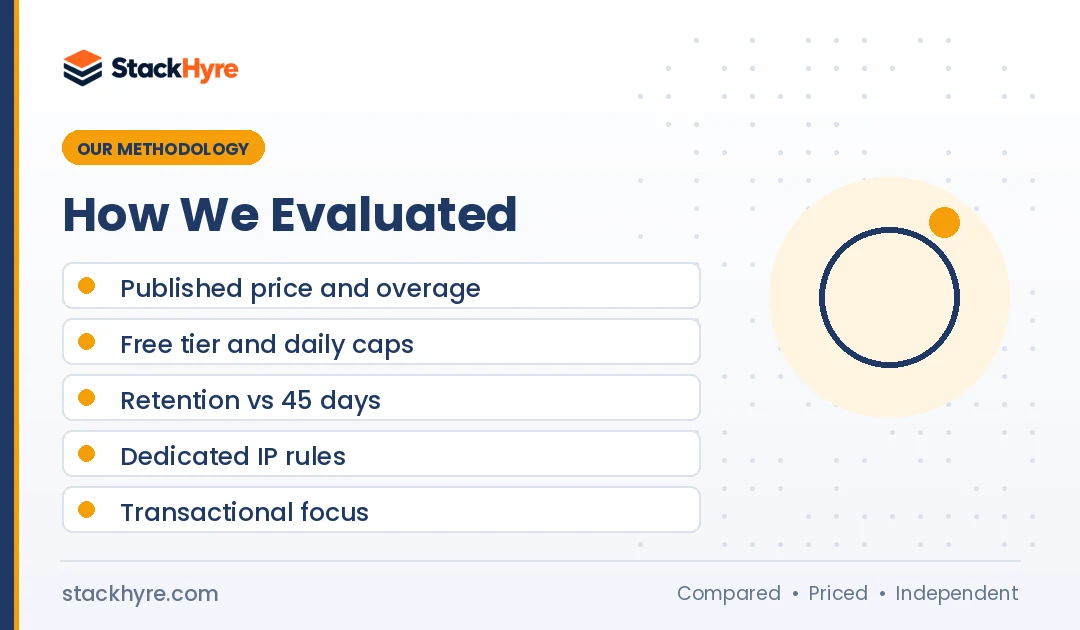
I looked at five things:
- Published price at 10,000, 50,000 and 100,000 emails, plus overage.
- Free tier size and daily caps.
- Retention and logs compared with Postmark’s 45 days.
- Dedicated IP rules and minimum volumes.
- Transactional focus versus marketing focus.
Every price links to the vendor’s own page. Prices change, so check before you buy. My editorial policy explains how I research and keep guides current.
The Bottom Line
If you like Postmark’s focus but want a bigger free tier and modern DX, pick Resend. If cost at volume is the issue, move to Amazon SES or, for managed tooling, Bird. If Postmark feels too strict for your mix of mail, Mailgun is more flexible. If you want campaigns in the same account, SendGrid or Brevo will cover it.
For simple SMTP with a dedicated IP at 100,000 emails a month, SMTP2GO is the budget pick.
Still unsure? Many teams should simply stay on Postmark. Price your top two options, then read Postmark vs SendGrid or my Mailgun alternatives guide for more detail.

Frequently Asked Questions
Who owns Postmark?
ActiveCampaign owns Postmark. It acquired Postmark, along with DMARC Digests, from Wildbit in 2022. Postmark still runs as its own transactional email product with separate pricing, docs and support. ActiveCampaign itself is a marketing automation company, which is why some buyers watch where Postmark’s roadmap goes.
Does Postmark have a free plan?
Yes, but it’s small. As of October 2026, Postmark’s pricing page lists a free developer tier of 100 emails a month with no overage allowed. Paid plans start at $15 a month for 10,000 emails on Basic. Pro is $16.50 and Platform is $18 at that volume, with lower overage rates.
What is the cheapest alternative to Postmark?
Amazon SES is cheapest per email at $0.10 per 1,000, as of October 2026. For managed options, SMTP2GO lists $10 a month for 10,000 emails and Resend’s free plan covers 3,000 a month. At very high volume, Bird’s per-1,000 rates of $0.35 to $0.45 also come in far below Postmark’s overage.
Is Resend a good replacement for Postmark?
For many developer teams, yes. Resend offers a bigger free plan, clean SDKs and React Email support, with 30 days of data retention. Postmark keeps 45 days by default and has a longer track record with separate message streams. If you use React or Next.js and want quick setup, Resend is a strong swap.
When does a dedicated IP make sense instead of Postmark’s shared pool?
A dedicated IP makes sense when you send steady, high volume and want full control of your reputation. Postmark sets the bar at 300,000 emails a month. Below that, a well-managed shared pool usually performs better, since a dedicated IP with low or uneven volume struggles to build a reputation with mailbox providers.
Related Articles


Daniel Brooks writes about proxies, web scraping and email infrastructure at StackHyre. He compares providers on published pricing, documentation and independent benchmarks so you can pick the right setup without overpaying.